Check Honey Labels

This jar of honey claims to be US honey but look at the four different honey sources.

This jar of honey claims to be US honey but look at the four different honey sources.

Honey labelling is a bit confusing, especially whether the honey was made and bottled in the US.

I recently came across a jar of honey that said it was "US Grade A Fancy" but then listed honey sources as US, Canada, Argentina and Ukraine.

When buying honey, make sure the label clearly states where the honey was bottled and only select honeys from the US. Many countries sell alternatives to honey that don't contain any pollen, a sure sign of real honey.

Better yet, only buy honey from local beekeepers, that way you know it's real honey.

Charlotte

How to Make Sugar Patties

A bowl, a spoon and a container to put the mix in is all you need to make sugar patties.

A bowl, a spoon and a container to put the mix in is all you need to make sugar patties.

It is very easy to make homemade sugar patties, especially the way my beekeeping friend David showed me.

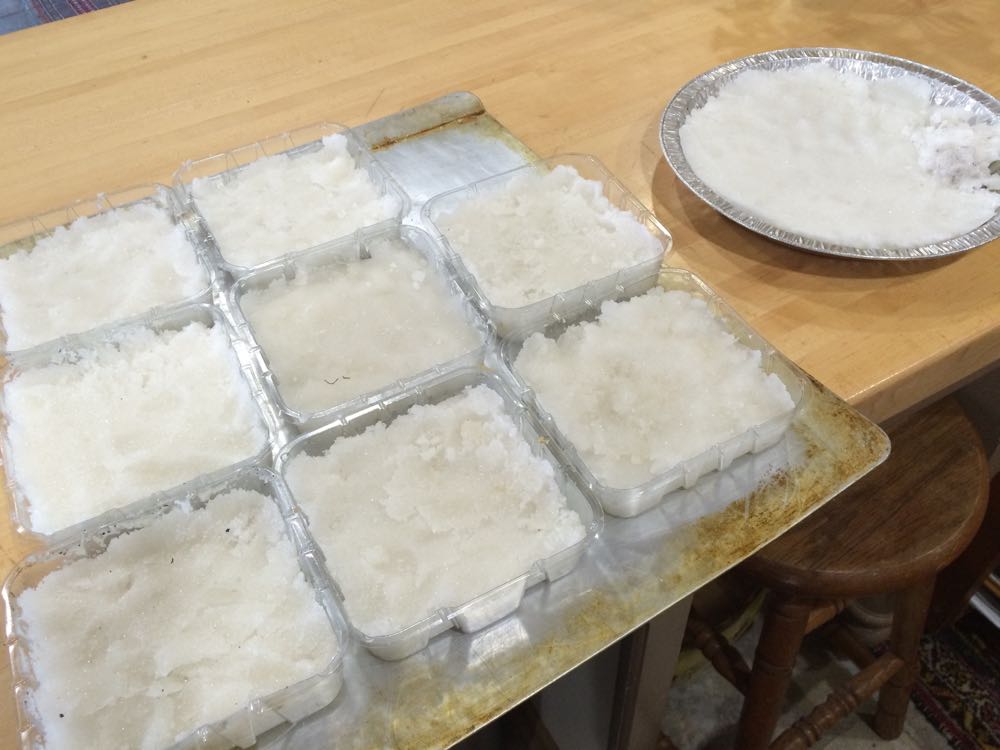
David uses aluminum pie tins so I will start with those quantities. For one pie tin, either 8" or 9," pour 2 cups sugar into a bowl. Spray with 40 squirts out of a spray water bottle. Mix with a wooden spoon or your hands. Pack into the pie tin. Allow a couple of days to dry.

When using clear suet containers, you will need 1 cup sugar and 20 squirts of water from a spray bottle. Mix. Pack into a suet container. Allow to dry.

David said sometimes he adds a drop of lemongrass, food grade essential oil to each patty. I skipped that step in making mine.

The first sugar patties I made I dried in an oven warmed to 100F, then turned off. Not sure that is necessary unless conditions are very humid.

Sugar patties drying

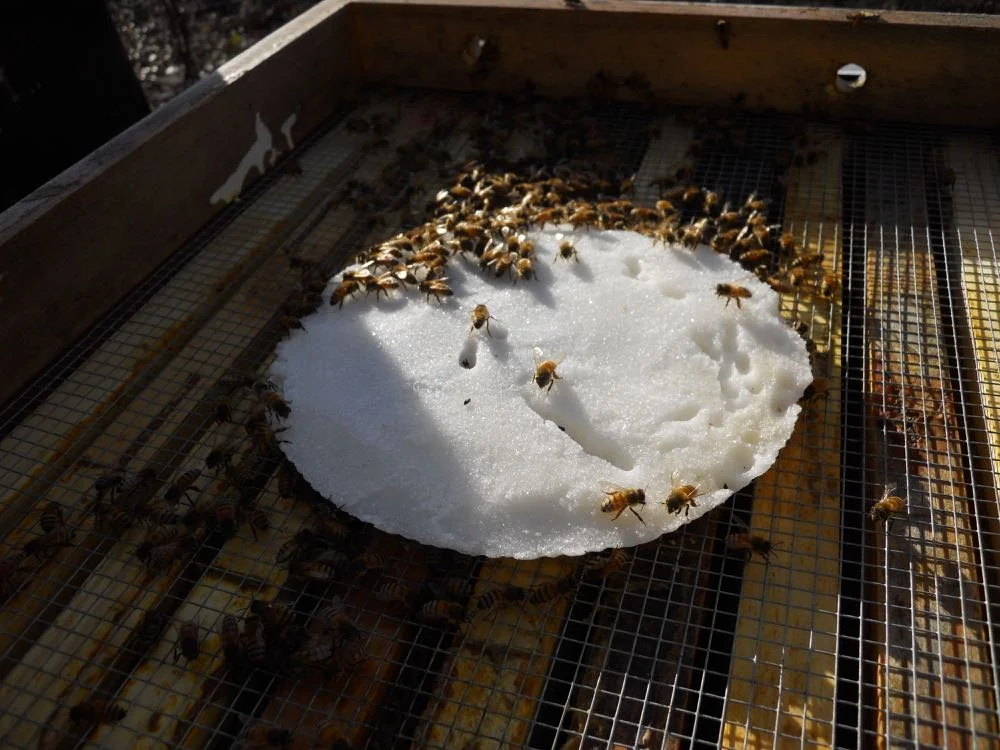
To feed, place in a top feeding shim under the inner cover to supplement winter honey supplies.

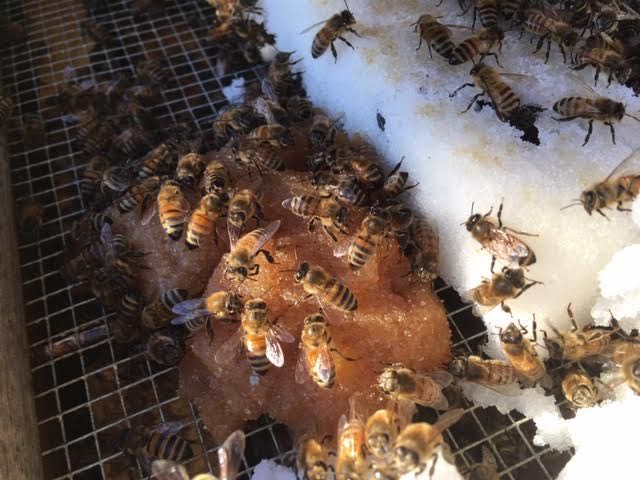
One of my bee colonies eating one of David's homemade sugar patties in a pie tin.

One of my bee colonies eating one of David's homemade sugar patties in a pie tin.

Once bees have a pollen supply from the garden they will stop taking the sugar. In the meantime, glad to be able to easily give my bees supplemental food so they don't starve at the end of winter.

Charlotte

Winter Sugar Snack

One of my bee colonies enjoying a sugar patty winter snack.

One of my bee colonies enjoying a sugar patty winter snack.

Honeybees make honey for winter food but having lost a colony to starvation, I hedge my bets with sugar patties. The concoction is simple to make in pie tins so they easily dry out. Once ready, I add them to my wired feeding shims on top of the hive, and where the colony is clustered, so they can easily find it.

On a nice warm early February 2016 day, I found them snacking away.

Charlotte

How to Use a Honey Dipper

Honey dippers are designed to easily transfer honey without getting honey, well - over everything.

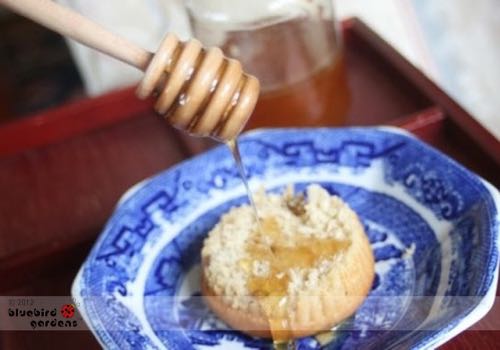
To use a honey dipper, dip the spiral end into honey and turn to coat. Move the dipper to where you want honey, then slowly twirl, allowing honey to drip.

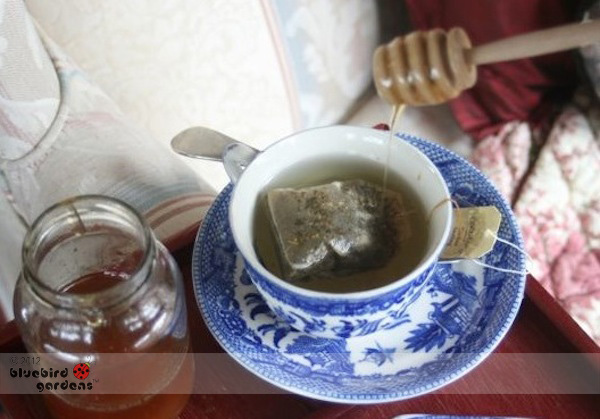
Use honey dippers to drizzle honey over breads, fruit, salads, even tea. Wash as you would a wooden spoon.

Honey Facial

Honey is a natural humectant with antimicrobial properties, which means your skin will be happy when you give it some sweet honey love. Try a basic honey wash by mixing a dollop of honey and two tablespoons of warm water and massaging the mixture into your skin. Or you can go all out and try the Cucumber Honey Facial.

WASH

What:  Gentle honey wash.

How: Mix a dollop of honey + 2 tbps. warm
water in the palm of your hand. Gentle massage the mixture into your skin.

Why: Honey has long been valued in Asia for its natural medicinal properties. Combined with rice bran, honey is used there to treat diaper rash and even acne. Honey is also an excellent treatment for dry skin as it stimulates good circulation and helps to seal in moisture.

Can You Still Use Chrystallized Honey?

There's nothing wrong with honey that has turned cloudy and become thick. To return crystallized honey to liquid form, place honey container in hot water for 5-7 minutes. Be careful of how hot you get the water; it can destroy some of honey's natural antioxidants. Do not heat honey in the microwave because it alters the honey taste. It only takes a few minutes for honey to turn back into its original liquid form so every couple of minutes pull it out of the water to see if it's liquified.

Sticky Situation

It takes some finesse to work with honey.

One of it's properties is that it's very sticky!

When cooking with honey, first spray utensils lightly with a vegetable spray.

Allow to dry for a couple of minutes, then pour honey into it.

Vegetable spray will help honey slide smoothly from your measuring utensils and make clean-up easier.

Did you know it takes 12 bees their lifetime to make 1 teaspoon of honey?

How Sweet It Is!

You can substitute honey for equal amounts of sugar in many liquid recipes. In baked goods, substitute sugar for up to half the amount with honey. Since honey is 18% liquid, reduce the amount of liquid in the recipe by 1/4 cup for each cup of honey. Add 1/2 tsp. baking soda for each cup of honey used to counteract the slight honey acidity which may cause too much browning. Skip baking soda if recipe calls for sour milk or cream. Reduce oven temperature by 15 degrees C or 25 degrees F because honey will brown goods more than sugar.